Katabarwa Labs
← All Atlassian apps

Confluence · Repo Docs Sync

Keep Confluence documentation in step with the repository it describes

Link a page to the repo path it documents. Your own CI runs Claude Code or Codex against the checked-out code and proposes the corrected page, stamped with the commit it was checked against.

Runs on Atlassian Forge inside your own tenant. No vendor servers: its only network calls go to api.github.com and gitlab.com, the CI you already own.

The gap

A page describes how a service is configured. The service changed eight months ago and the page did not. The failure is invisible by construction, because a wrong page looks exactly like a right one, and you find out when a new engineer follows it or during an incident. Pointing a chatbot at Confluence does not fix it: a bot reading stale documentation inherits its mistakes and delivers them fluently.

What it does
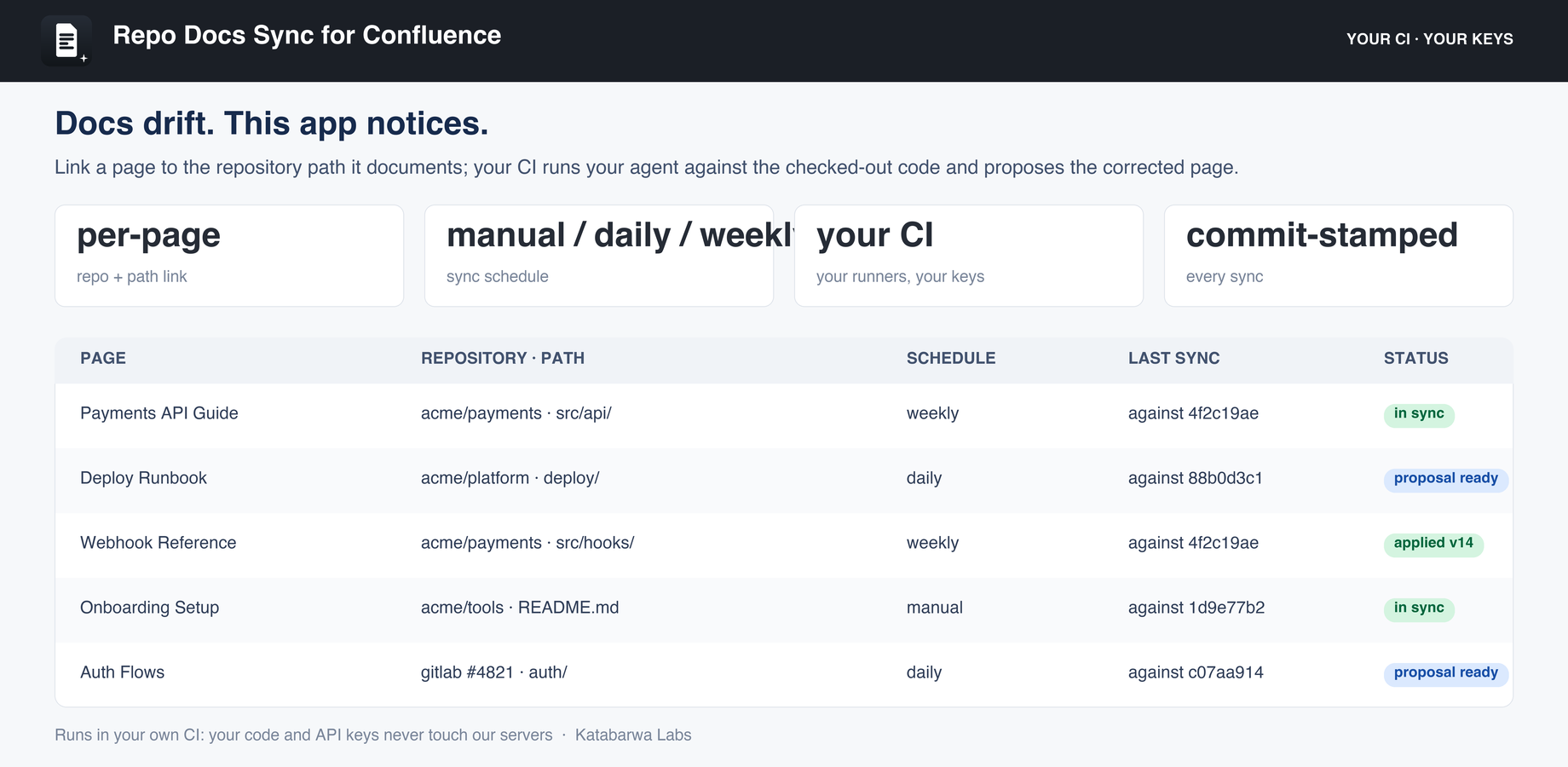
Pages linked to the repository paths they document, with the schedule, the commit of the last sync, and whether each is in sync or has a proposal waiting.
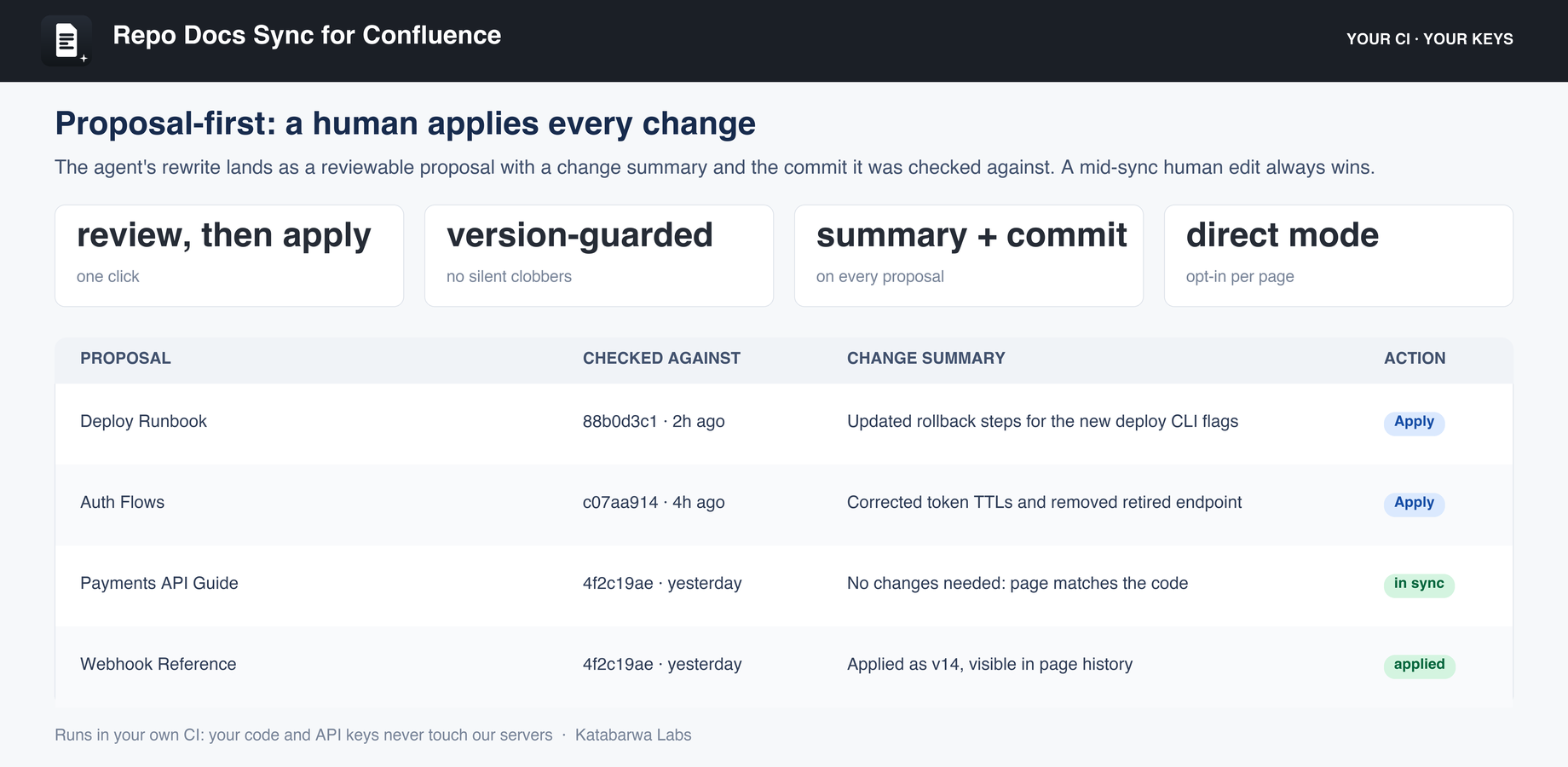
A proposal: what the agent changed and why, the commit it was checked against, and the apply button a human has to press.
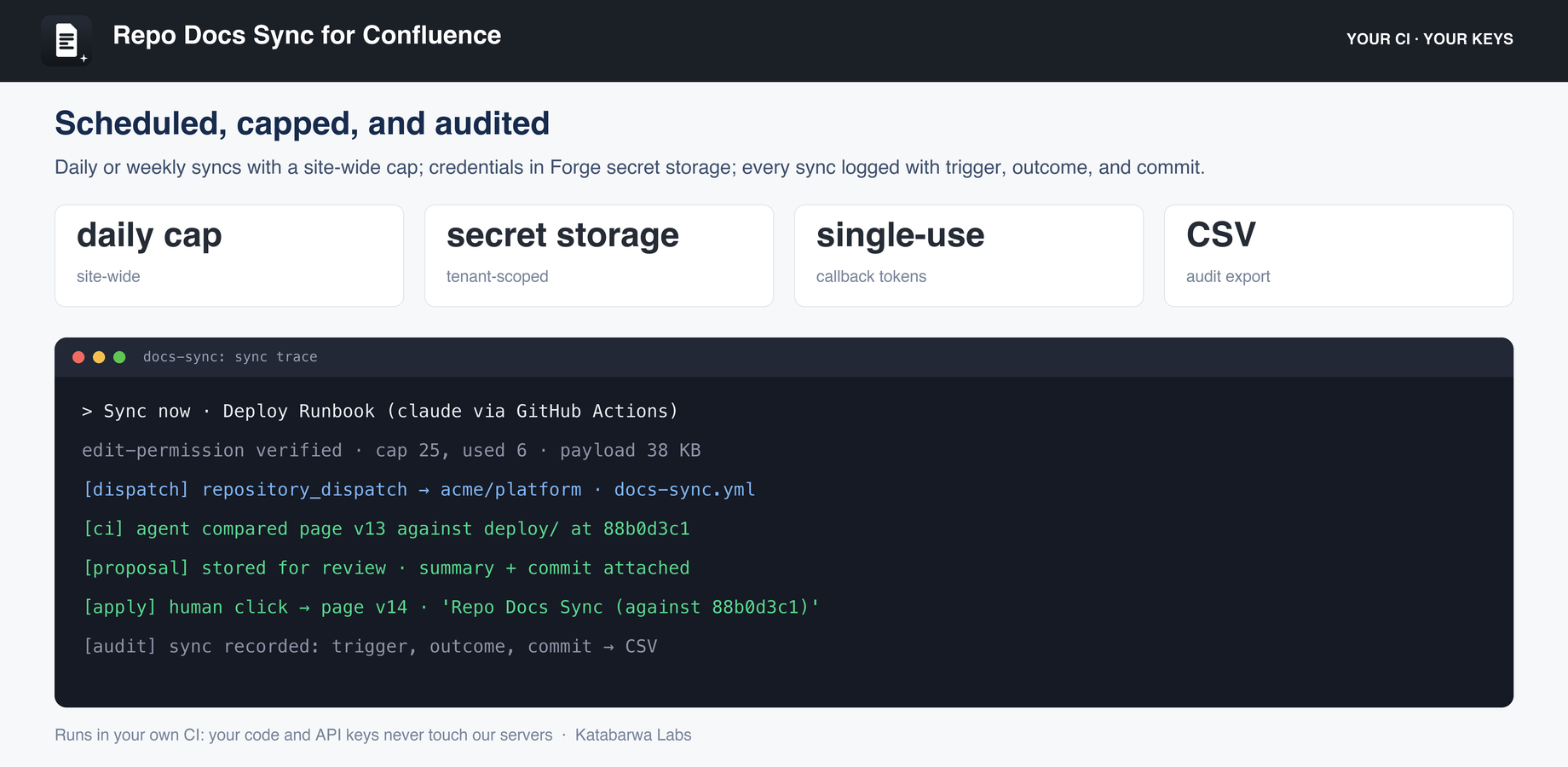
The sync trace: dispatch to your CI, the agent comparing page to code, the proposal stored, the human applying it, and the audit row.
Honest about its limits
Security & permissions

Built on Atlassian Forge: the app runs on Atlassian's own serverless platform inside your tenant and stores its data in Forge storage. Its network calls are declared in the manifest and limited by Forge to api.github.com and gitlab.com; no other destination is reachable. What leaves your tenant is starts a pipeline in your own CI and receives the proposal back over a single-use tokened web trigger Every scope it requests, and why:

read:confluence-content.all the page body to compare against the code
write:confluence-content applying a proposal a person has approved
storage:app links, proposals and the sync log, in your tenant
The native feature it builds on

Atlassian's own documentation for what Confluence does out of the box, so you can see exactly where the gap is:

FAQ

Does any data leave my instance?

Only to systems you own. The app runs on Atlassian Forge inside your tenant and calls api.github.com and gitlab.com, nothing else. What leaves is starts a pipeline in your own CI and receives the proposal back over a single-use tokened web trigger

How is it billed?

Through the Atlassian Marketplace, on your existing Atlassian bill, priced per user like any Cloud app. The listing has a free evaluation and the exact calculator for your tier.

Where do I get support?

Email support@katabarwalabs.dev or open an issue from the documentation page. You talk directly to the people who build the app.

Install Repo Docs Sync in about a minute.

Free evaluation from the Marketplace listing. If it does not fit your workflow, tell us what would and we will build it.